The origins of the Kandyan dance tradition trace back to the era of King Vijaya, with its foundation rooted in the ancient ritual known as Kohomba Kankariya shanthikarma. Flourishing under the royal patronage of the Kandyan kings, this dance form was a popular dance tradition since then.
The dance form which emerged from upcountry areas such as Sathkoralaya, Sathara Koralaya, Kandy, Udunuwara, Yatinuwara, Dumbara, and Harispaththuwa was performed exclusively by men until the late 19th century. Later, it was opened to women as well. Today, the Kandyan dance tradition has spread across the entire island.
At the heart of this tradition lies the Ves dance, one of the most valuable cultural elements that highlight the identity of Sri Lanka. In addition, several other dance forms such as the Naiyandi, Udakki, and Pantheru dances add depth and variety to the tradition. Another integral aspect of Kandyan dance is the Vannam. There are 18 Vannams in the Kandyan dance tradition. They were originally composed as verses that describe the behavioural patterns of animals. The term Vannam means praise. Over time, they evolved into lyrical compositions inspired by nature, legends, folk religious beliefs and art. Ancient texts note that King Sri Weera Parakrama Narendrasingha extended great support to the development of dance and music during his reign.
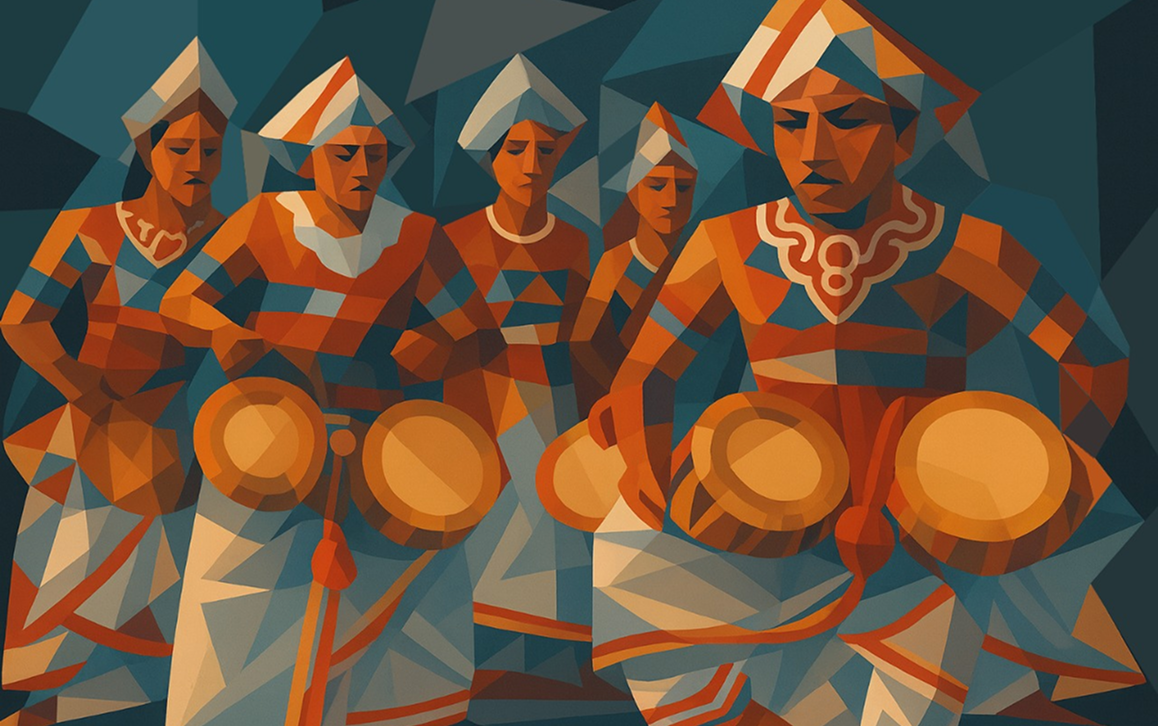
The Geta Beraya, serves as the main musical instrument in the Kandyan dance tradition, while the Thalampota (small cymbals) helps the dancer maintain rhythm. When combined with singing, these instruments bring the performance to life in a mesmerizing blend of sound and movement.
The Ves costume which highlights the solemnity of the Kandyan dancer reflects the culture and identity of Sri Lanka. It is complemented by the headdress and the beautiful beaded adornment that covers the dancer’s chest. Only dancers who have completed the ceremonial Ves Mangalya and fulfilled the required qualifications are permitted to wear the full Ves costume. Other costumes such as the Naiyandi, Udakki (Raban), Pantheru, and Hevisi attires have been designed separately.
Various shanthikarmas are associated with the Kandyan dance tradition. Among them, the Kohomba Kankariya holds a special place. It is performed to seek protection from disease, invite prosperity, and safeguard against natural disasters, and in modern times, it is also conducted for educational purposes. Other rituals within the Kandyan dance tradition include Bali Shanthikarma, Devol Madu, and Waliyak Mangalya.
Traditional dancers from the four main generations (paramparas) of the Kandyan dance tradition – Amunugama Suramba Gurunnanse, Thiththapajjala Suramba Gurunnanse, Niththawela, and Thalgahagoda – made significant contributions to the development of this dance form and gifted their skills to future generations to preserve this noble heritage. Members of the old gurukula tradition, including Panibharatha, Algama Kiriganitha, Heen Baba Guru, Amunugama Gnanadasa Rajapaksa, Deshamanya Kalaguru Chitrasena, Wasantha Kumara, and Sri Jayana, as well as renowned dancers from the Niththawela generation (parapura) such as Niththawela Gunaya, Simon Malagammana, Piyasara Shilpadhipathi, and Peter Surasena and the pioneering female dancers, Chandralekha, Miriam Peiris, Ranjana Thangaraja, Sirimathi Rasadari, Padmini Dahanayake, Miranda Hemalatha, and Vajira Chitrasena played key roles in nurturing the Kandyan dance tradition.
Even today, the Kandy Esala Perahera, organized by the Sri Dalada Maligawa (Temple of the Tooth Relic) and the Hathara Maha Devalayas, offers an invaluable opportunity for local and foreign audiences to witness the splendor of Kandyan dance tradition that includes artistic elements such as Shanthikarmas, Vannams, Saudams, and Kauththams.