Sri Lankan folk culture is a rich heritage which has evolved over thousands of years. The Kohomba Kankariya, which can still be seen today stands as a mesmerizing symbol of the island’s vibrant culture. The Kohomba Kankariya is an unmatched cultural image that beautifully blends religion, dance, music, medicine, and folklore.
The Kohomba Kankariya has a background story dating back to the time of King Vijaya, from whom the Sinhalese are believed to have descended.
The Kohomba Kankariya Shanthikarma (ritual) is performed in the areas of Udunuwara, Yati Nuwara, Dumbara, Hewa Heta, Harispatthuwa, Thunapane, Sathkorale, and Sathara Korale, usually during March and April, coinciding with the paddy harvest season. In addition, the Kohomba Kankariya Shanthikarma is performed at other times of the year to ward off epidemics, drive away evil spirits, pay homage to nature, and also to preserve this invaluable element of national cultural heritage in modern times.
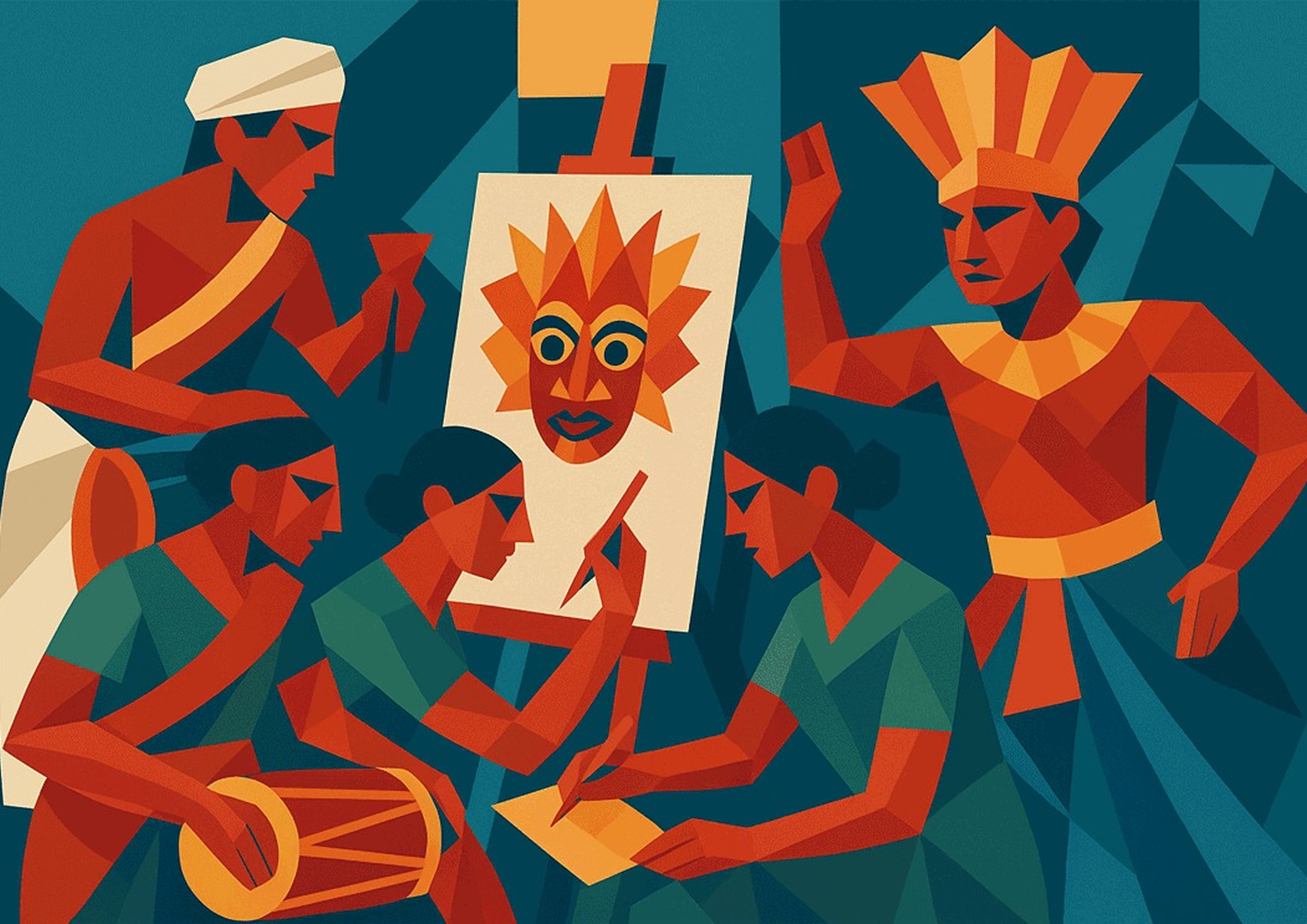
This ritual is centered on the Kohomba deity and includes a series of traditional customs and performances of dance and music. The dance performances of Kohomba Kankariya are performed with and without singing. Kuveni Asna, Kohomba Hella, Madu Puraya are dances that are performed with singing while Yak Anuma, Hath Padaya, Kolpaduwa, Dunu Malappuwa, Aawenduma and Malhath Padaya are dances performed without singing.
The main instrument used in Kohoma Kankariya is ‘geta beraya’ (drum), and in addition, the ‘thalampota’ (cymbals) is also used. Playing of Magul Bera (drum) and Athya Bera (drum) marks important instrumental moments in Kohomba Kankariya.
The Kandyan Ves Costume inspired by the regal attire of the ancient Malaya kings is the main dance attire of the dancers of Kohomba Kankariya Shanthikarma.
The Kohomba Kankariya also includess five dramatic performances.
Several unique decorations, all beautifully crafted from natural materials, can also be seen in the Kohomba Kankariya.
Known by many names – Kohomba Yak Kankariya, Kohomba Yakuma, or Kohomba Yakkama – this sacred ritual has been passed down through generations within Sinhala Buddhist communities. In today’s context rituals like this are being studied and analyzed repeatedly. Although many consider this ritual to be merely a mythological tradition, its significance as a cultural heritage is immense. It is an artistic heritage gifted to the new generation and a dance-rich spiritual identity that must be preserved for the future.