The Sabaragamuwa Dance Tradition which is believed to trace its origins to Jeevahattha and Disala, the two children of King Vijaya and Kuveni, is rooted in the social, cultural, and religious life of the island’s indigenous people who are also called the Veddas. According to folk stories, it this dance tradition believed to have developed among the Saparu community who lived in the Samanthakoota area of Sabaragamuwa. The word ‘Saparu’ is a word synonymous with Vedda and the history mentions that the term Saparu later changed into Sabaru. Thus, the land once inhabited by the Veddas came to be known as Sabaragamuwa. Centered on the historic Maha Saman Devalaya, (Temple of God Saman) this remarkable dance tradition embodies the unique cultural and traditional characteristics of the region. The Sabaragamuwa dance aradition is a pure and unmixed dance form, reflecting the unique identity of the Sabaragamuwa Province particularly in areas such as Kuruwita Koralaya, Ata Kalan Koralaya, Meda Koralaya, and Kolonna Koralaya. This dance tradition which is the oldest dance tradition in Sri Lanka is rich in shanthikarmas, dance, music and singing.
Among the Shanthikarmas that form a vital part of the Sabaragamuwa dance tradition, the main Shanthikarma is the Pahan Madu Shanthikarma. This ritual is performed to cure illnesses, invite prosperity, seek protection from natural disasters, and also as a form of entertainment. The Shanthikarmas vary according to the deities and demons associated with each ritual. Some of the notable rituals and traditions include Hallum Madu, Kiri Madu, Iramudun Samayama, Dahaata Sanniya, Mangala Samayama, Baliyaga, and Graha Pooja.
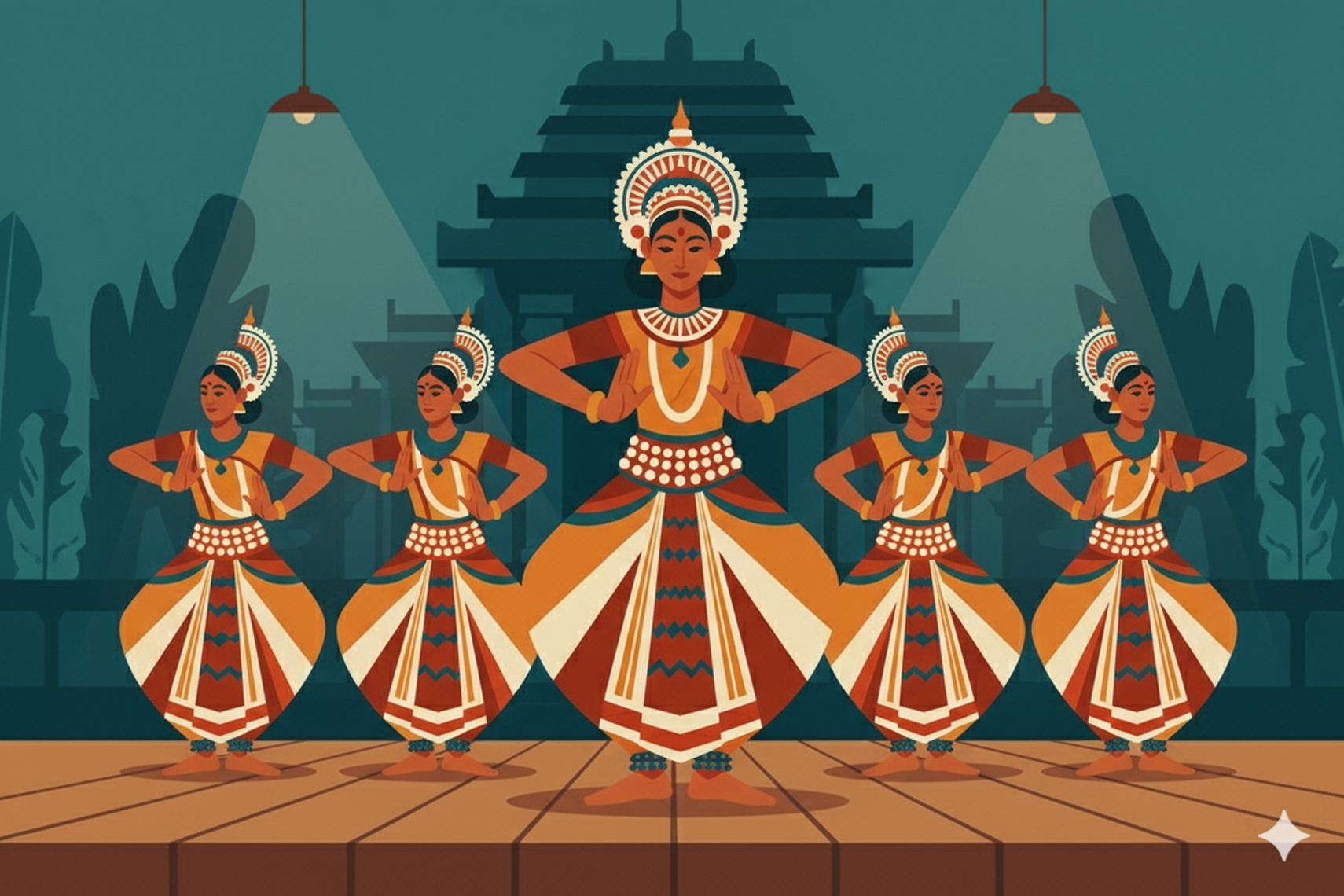
The main posture in this dance tradition is known as the Mandiya. In this posture, one hand is held with the palm facing inward towards the dancer, while the other faces outward. This is different from the Mandiya seen in the Kandyan (Up Country) dance tradition. The Sabaragamuwa dance tradition is developed around five main mathras. Even the Saman Devalaya Perahera (Procession of the Temple of God Saman) follows these five mathras. A beginner in Sabaragamuwa dance must first master thirty six Harambas. Once these fundamentals are learned, students progress to mastering the aspects of singing, drumming, and dancing.
There are various opinions about the exact number of Vannams in the Sabaragamuwa tradition. Historical records offer limited information on that matter. Some traditional dance teachers believe there are 18 Vannams. The book ‘Sabaragamuwa Natya Kalawa’ published in 1959 lists 18 vannams. Some argue there are 31 vannams while others claim there are 36 vannams. Scholars say that there are 24 vannams in the Sabaramaguwa dance tradition. The National Education Institute has also agreed that there are 24 vannams. However, the number of vannams has long been a topic of debate.
The principal costume worn in Sabaragamuwa dance is the Pabalu (Bead) costume, designed to resemble the attire of God Saman.
The key musical instrument of this tradition is the Davula. It is the only drum used in Sri Lanka which is played using both the hand and a stick. Historical sources mention another instrument, called the Patawa but it is no longer found today. The Davula holds a distinguished place in Sri Lanka’s musical heritage as one of the oldest and most distinctive drums used in the island.
To perform skillfully, a Davula player must first master twelve fundamental drills.
Although the Sabaragamuwa dance tradition originated and evolved as a unique and independent dance form, over time it absorbed elements from the Up Country (Kandyan) and Low country dance styles, as well as influences from neighboring India.
Several generations of dancers and teachers (Paramparas) have contributed to the preservation and development of this dance tradition. Among the most respected generations are the Dodampe Ganitha Generation, Haldola Generation, Balangoda Halpe Generation, Koskolawatta Generation, Elapatha Generation, Theppanawa Pahalagama Generation, Malgahapitiya Generation, Dambuluwana Generation, Pelmadulla Generation, Devpahala Guru Generation, Balangoda Bulathgama Generation, and Galukagama Generation.
Their dedication has been instrumental in safeguarding this dance tradition. Notably, the Sabaragamuwa dancers performed in the Perahera Pooja held for the Sacred Tooth Relic which was brought from the Delgamuwa Rajamaha Viharaya to Kandy, until 1926. However, the Sabaragamuwa Guruparapura withdrew from the pooja following a disagreement with the Diyawadana Nilame. Today, the Sabaragamuwa Dance Tradition is confined to the Sabaragamuwa province. According to the Sabaragamuwa dancers, the tradition now struggles to survive because there is no institute to support its continuity and preservation. Preserving this invaluable cultural legacy is a collective duty of all who cherish Sri Lanka’s living heritage.