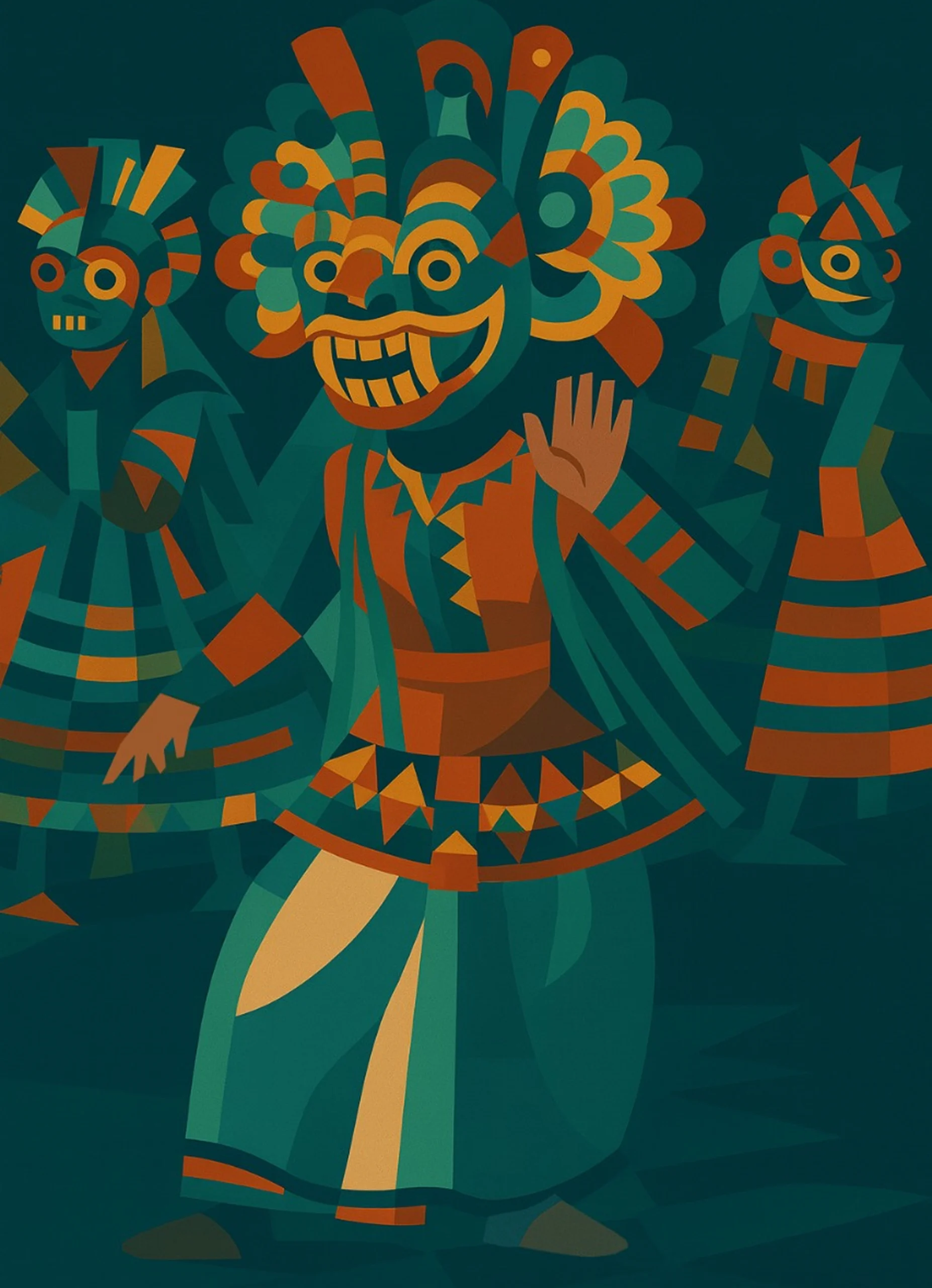
Various shanthikarmas, which are unique to the Kandyan (Upcountry), Lowcountry and Sabaragamuwa dance traditions, are often performed to seek protection from diseases and effects from inauspicious astrological periods and to achieve mental well-being. These shanthikarmas are performed for the deities, demons and planets. Each shanthikarma differs according to the deities and demons involved in the rituals according to each tradition.
Kohomba Kankariya, the main shanthikarma of the Kandyan dance tradition is performed for deities. The Kadawara Samayama and the Devol Bhagaya are performed for the demons while the Baliyaga is performed for the planets.
The main shanthikarma in the lowcountry tradition is the Devol Madu Shanthikarma. Gam Madu, Mal Madu, Poona Madu, and Gini Madu are performed for deities, whereas Sanni Yakuma, Rata Yakuma, Sooniyam Kapilla, Maha Sohon Samayama, Kumara Samayama, and Gopalu Samayama are performed for demons. Baliyaga, Graha Pooja and Graha Shanthi are performed for planets.
The main Shanthikarma of the Sabaragamuwa dance tradition is the Pahan Madu Shanthikarma. Hallum Madu and Kiri Madu Shanthikarma are performed for the deities. Iramudun Samayama, Daha Ata Sanniya, Mangala Samayama, and Deva Thovilaya are performed for the demons while Baliyaga and Graha Pooja are performed for the planets.
The three main shanthikarmas of the three main traditions- Kohomba Kankariya, Devol Madu, and Pahan Madu – are associated with distinct origins, legends, stories, and historical contexts, each carrying its own symbolic and artistic features.
Kandyan Dance Tradition
The Kohomba Kankariya Shanthikarma originated during the time of King Panduwasdev, who suffered from an illness. Kohomba Kankariya is performed to seek protection from disease, invite prosperity, safeguard against natural disasters, for entertainment and in modern times, it is also conducted for educational purposes. The Magul Beraya, Athya Beraya, and Yakthun Beraya drums are the main instruments used. The ritual involves worship, singing, drumming, and dance performances.
Lowcountry Dance Tradition
The Devolmadu Shanthikarma is believed to have originated from a legend about King Serimana, who suffered from a severe headache. The ritual is performed to heal illnesses, bring prosperity, seek protection from natural disasters, and provide entertainment In contemporary times, it is also carried out for educational purposes.The deities and demons worshipped are Devol Devi, Pattini Devi and Gambara Devi. The Magul Beraya and Pin Beraya are used as musical instruments. The ritual involves offerings, singing, drumming, and various dance and dramatic performances.
Sabaragamuwa Dance Tradition
The main shanthikarma in the Sabaragamuwa dance tradition, the Pahan Madu Shanthikarma, is also connected to the legend of King Serimana’s ailment. It is performed to dispel diseases and ailments, to invite prosperity, to seek protection from natural disasters, to provide entertainment and, in the present day, for educational purposes. Devol Devi, Paththini Devi and Gambara Devi are the main deities and demons that are worshipped in this shanthikarma. The Mangala Davula serves as the main drum used in the ritual. This shanthikarma also includes various rituals, dances and dramatic performances.
From ancient times to the present day, people have believed in Shanthikarma as a way to heal the mind. Traditionally, these rituals were performed to cure illnesses of villagers, eliminate epidemics, counteract the negative effects of planets, protect crops, and invoke rain during the drought seasons. Shanthikarma has long served as both mental and physical healing for communities. Today, even foreigners have the opportunity to witness and appreciate this unique artistic and cultural heritage of the Sinhalese people.